If chronic back pain has become part of your daily routine, it is understandable to wonder whether surgery is the only way forward.
But chronic back pain does not mean you need surgery.
In fact, for many people, treatment begins well before an operating room is considered.
Exercise-based rehabilitation, targeted medications, behavioral approaches, physical therapy, and, for carefully selected patients, interventional procedures can all have a role.
The bigger question is not simply, “Do I need back surgery?”
Chronic back pain can come from different structures and conditions. Treatment that is appropriate for nerve-related pain may not be appropriate for facet-joint pain, and neither approach may be right for uncomplicated nonspecific low back pain.
So when should surgery actually be considered, and what can a pain management doctor offer before that point?
Chronic Back Pain Does Not Always Mean Surgery
Chronic pain is generally defined as pain lasting more than three months. But duration alone does not determine whether surgery is necessary.
Two people can both have chronic back pain while having completely different causes, symptoms and treatment needs.
One person may have primarily muscular or nonspecific low back pain. Another may have pain related to spinal joints. Someone else may have a herniated disc irritating a nerve, producing leg pain, numbness or weakness.
These differences are clinically important.
For chronic primary low back pain, the WHO recommends a person-centered approach that can combine education, exercise, physical therapies, psychological approaches, medicines and other appropriate interventions.
The goal is not simply to make the pain disappear. A broader treatment plan may aim to improve movement, physical function, sleep, work participation and quality of life.
When Is Back Surgery Actually Considered?
Surgery can be an important treatment for certain spinal conditions, but it is not a universal solution for chronic back pain.
Surgical treatment may be considered when there is a specific structural problem that is likely to benefit from surgery and when the individual’s symptoms, examination and imaging findings align.
Examples can include certain cases involving:
- Significant nerve compression
- Progressive neurological problems
- Spinal instability
- Some fractures or structural abnormalities
- Certain severe forms of spinal stenosis
- Persistent symptoms from a specific condition despite appropriate nonsurgical treatment
The situation is different for nonspecific chronic low back pain.
That is why an MRI report alone should not determine whether someone needs surgery.
Why an MRI Does Not Automatically Mean You Need an Operation
An MRI can reveal disc bulges, degenerative changes, arthritis, narrowing and other findings.
But seeing an abnormality on a scan does not necessarily mean that abnormality is responsible for your pain.
Spinal changes are common, particularly as people age. Some people have significant-looking findings without symptoms, while others can experience substantial pain despite relatively modest imaging findings.
A useful evaluation therefore connects three pieces of information:
Symptoms + physical examination + imaging when appropriate
When these findings point toward the same pain-generating problem, treatment decisions become more meaningful.
This is also why routine imaging is not recommended for every person with low back pain. Imaging is generally most useful when the result is expected to change management or when there is concern about a specific underlying condition.
What Non-Surgical Treatment Options Can Help Chronic Back Pain?
Non-surgical care is not one treatment. It is better understood as a toolbox.
The right combination depends on the suspected cause of pain, symptoms, medical history, physical function and previous treatment response.
1. Physical Therapy and Exercise
Movement is one of the foundations of modern chronic back pain care.
A personalized physical therapy program may focus on:
- Improving spinal and hip mobility
- Building strength and endurance
- Improving movement tolerance
- Addressing physical deconditioning
- Gradually returning to daily activities
- Improving confidence with movement
The goal is not necessarily to find one perfect exercise.
Instead, rehabilitation can help the body gradually tolerate the movements and activities that pain has made difficult.
Exercise and other physical interventions among the nonsurgical approaches that may be used for chronic primary low back pain.
2. Education and Self-Management
Understanding your pain can itself be an important part of treatment.
People with chronic back pain often become caught between two concerns: moving too much might make the pain worse, while doing too little can contribute to physical deconditioning.
Education can help patients understand what movements are appropriate, how to pace activities and how to participate in rehabilitation safely.
WHO recommends education and self-management strategies as part of care for chronic primary low back pain.
3. Medication When Appropriate
Medication can sometimes help manage symptoms while a person works on rehabilitation and other aspects of recovery.
Depending on the individual’s circumstances, a clinician may consider medications such as certain nonsteroidal anti-inflammatory drugs.
But medication is not appropriate for everyone. Age, kidney function, cardiovascular health, gastrointestinal risks and interactions with other medications all matter.
For chronic pain, medication is generally more useful when it is considered as part of a broader treatment strategy rather than treated as the entire plan.
4. Behavioral and Psychological Approaches
Chronic pain is not “all in your head.”
At the same time, persistent pain can affect sleep, stress, mood, activity levels and the way the nervous system responds to pain.
Psychological approaches such as cognitive behavioral therapy can sometimes be incorporated into chronic pain care. This does not mean the pain is psychological. Rather, these approaches can help people develop strategies for coping with persistent symptoms and improving function.
Psychological interventions are among the recommended nonsurgical treatment options for chronic primary low back pain.
5. Interventional Pain Procedures
This is where evaluation by a pain management doctor can become particularly relevant.
Interventional pain management focuses on identifying potential pain generators and, when appropriate, using targeted procedures as part of a broader treatment plan.
Depending on the suspected source of pain, options may include:
- Epidural steroid injections for selected forms of nerve-related pain
- Facet joint injections in appropriate clinical situations
- Medial branch blocks as diagnostic procedures
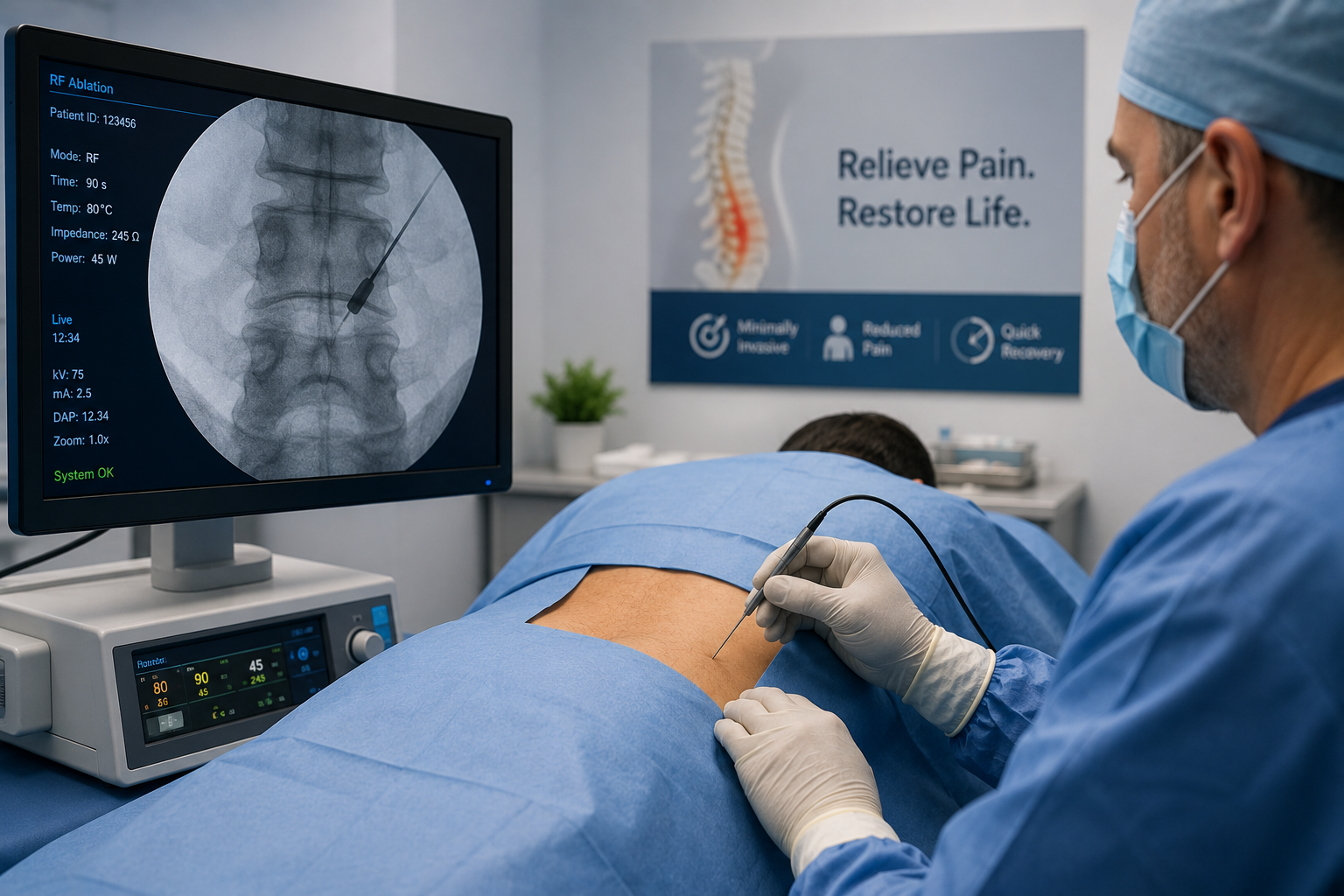
- Radiofrequency ablation for selected patients with facet-mediated chronic back pain
- Other targeted spine or joint procedures
These procedures are not interchangeable, and they are not appropriate for every patient.
For example, an injection intended to address inflammation around a spinal nerve is fundamentally different from a procedure targeting pain arising from facet joints.
The purpose of careful evaluation is to determine whether a procedure actually matches the suspected source of pain.
What About Radiofrequency Ablation?
Radiofrequency ablation, sometimes called radiofrequency denervation, is one example of an interventional treatment that may be considered for carefully selected patients with chronic pain arising from facet joints.
The basic concept is to use radiofrequency energy to disrupt specific sensory nerve pathways that are transmitting pain signals from the targeted joint region.
It is not a treatment for every type of back pain.
Patient selection is particularly important. Diagnostic procedures may be used to determine whether the suspected facet joints are contributing meaningfully to the pain before radiofrequency treatment is considered.
This illustrates an important principle of chronic pain care:
The procedure should follow the diagnosis, not the other way around.
Can Spinal Injections Prevent Surgery?
This is a more complicated question than it may seem.
Spinal injections are not designed to “repair” every structural problem, and they cannot guarantee that surgery will never be necessary.
However, for selected patients, an injection may be used to help manage symptoms, support rehabilitation or provide diagnostic information.
For example, epidural injections may be considered in certain situations involving severe nerve-related leg pain.
Whether an injection makes sense depends on the underlying condition, symptom pattern, duration of symptoms, examination findings and other factors.
The goal should be an individualized treatment plan rather than simply trying one procedure after another.
What If Physical Therapy Has Not Worked?
Failure of one treatment does not necessarily mean that surgery is the next step.
Sometimes the issue is not that nonsurgical care “failed,” but that the treatment plan did not adequately match the underlying problem.
For example, persistent symptoms may prompt a clinician to reconsider:
- Whether the original diagnosis was correct
- Whether there is nerve involvement
- Whether a particular joint may be contributing to the pain
- Whether rehabilitation needs to be modified
- Whether additional evaluation is appropriate
- Whether an interventional procedure may be reasonable
- Whether a surgical consultation is warranted
Chronic pain often requires reassessment rather than simply repeating the same treatment indefinitely.
When Should You See a Pain Management Doctor?
Consider speaking with a pain management doctor if back pain has persisted despite initial care, repeatedly interferes with normal activities, or is associated with symptoms that suggest a more specific spinal problem.
A pain specialist can assess the pattern of pain, review relevant imaging and medical history, perform a physical examination and determine whether interventional treatment may have a role.
This does not mean that every patient needs an injection or procedure.
In many cases, the most appropriate recommendation may be continued rehabilitation, activity modification, medication management, additional evaluation or referral to another specialist.
The value of specialist care is often in determining what should happen next, not simply performing a procedure.
When Should Back Pain Be Evaluated Urgently?
Chronic back pain should not be assumed to be routine when new warning signs appear.
Seek prompt medical attention if back pain is accompanied by symptoms such as:
- New or worsening significant weakness in the legs
- New loss of bladder or bowel control
- Numbness around the groin or saddle region
- Severe symptoms following significant trauma
- Fever or other concerning systemic symptoms
- Rapidly progressing neurological symptoms
Some of these symptoms can indicate serious neurological or systemic conditions requiring urgent evaluation.
FAQs
Can chronic back pain go away without surgery?
Some people experience substantial improvement with nonsurgical care, while others have persistent or recurring symptoms. The outcome depends on the underlying cause, duration, severity and individual health factors. There is no single treatment that works for everyone.
How long should I try non-surgical treatment before considering surgery?
There is no universal timeline. It depends on the diagnosis and severity of the condition. Some conditions require earlier surgical evaluation, particularly when significant or progressive neurological problems are present. For other forms of chronic back pain, nonsurgical management may remain the primary approach.
Does chronic back pain mean I have a damaged spine?
Not necessarily. Chronic pain can occur with or without an identifiable structural abnormality. Imaging findings also do not always explain a person’s symptoms.
Can a pain management doctor help if I do not want surgery?
Yes. Pain management specialists can evaluate chronic pain and discuss nonsurgical options, which may include rehabilitation, medication management and selected interventional treatments when appropriate.
Is radiofrequency ablation an alternative to back surgery?
For carefully selected patients with certain types of chronic back pain, radiofrequency ablation may be considered as an interventional treatment. It is not a general replacement for spinal surgery and is not appropriate for every cause of back pain.
When is surgery more likely to be necessary?
Surgery becomes more relevant when there is a specific structural condition for which surgery is expected to provide benefit, particularly when symptoms are severe or persistent despite appropriate nonsurgical care, or when significant neurological problems are present.
Get Modern Chronic Back Pain Care
Modern back pain care increasingly focuses on identifying the likely source of symptoms and using the least invasive appropriate treatment before considering more invasive options.
Exercise and rehabilitation, education, medication, behavioral approaches and carefully selected interventional treatments can all have a role.
But nonsurgical treatment should not mean endlessly tolerating pain or repeating treatments that are not helping.
If your symptoms are persistent, the next step may be a more detailed evaluation to understand what is actually driving them.
At Interventional Pain and Spine, we provide personalized, evidence-informed care for chronic back pain with a focus on improving function, mobility, and quality of life. Our specialists perform a thorough evaluation to identify the likely source of your pain before recommending a treatment plan tailored to your needs.
When appropriate, we may recommend rehabilitation, medication management, or image-guided interventional treatments based on your diagnosis. Our goal is to help you regain mobility, reduce pain, and get back to living life more comfortably.
Find the source of your back pain and explore personalized treatment options with our specialists.