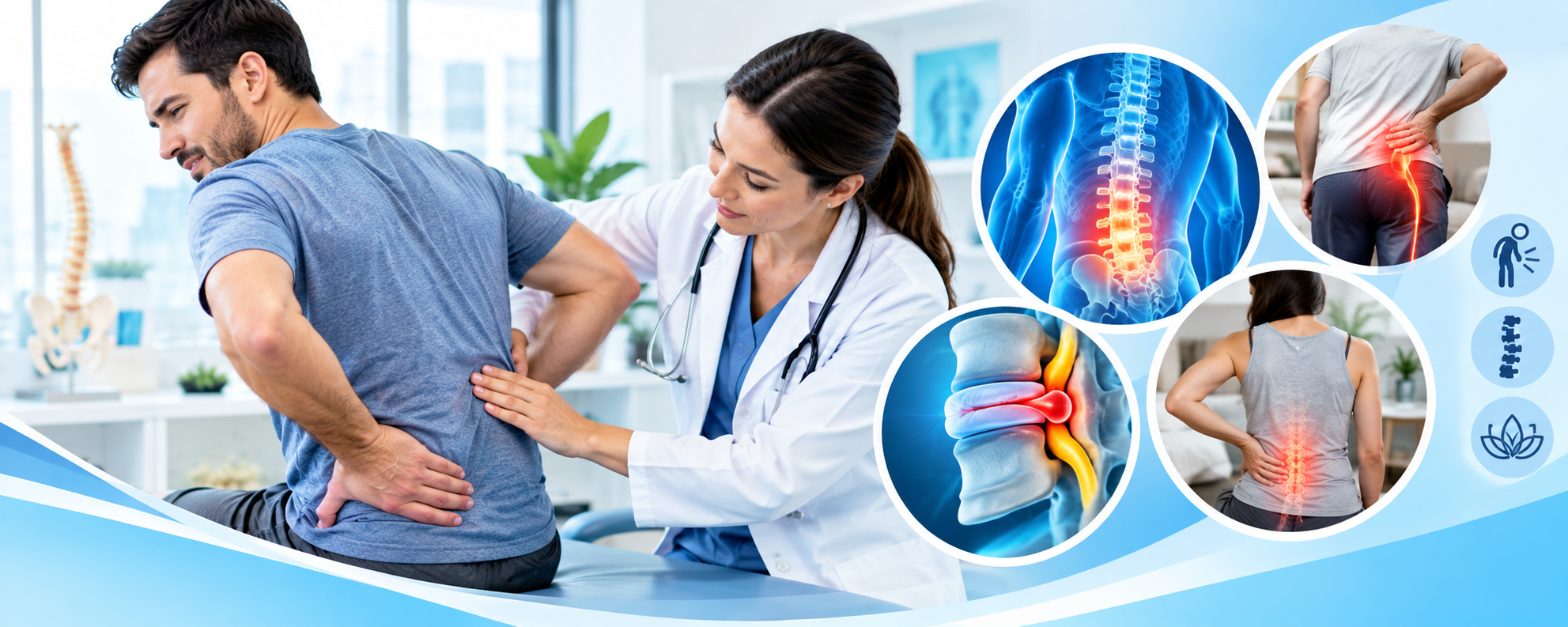
Lower back pain has a way of taking over the simplest parts of your day. Getting out of bed, sitting through a meeting, driving across Fort Worth or bending down to pick something up can suddenly become uncomfortable challenges.
And when the pain keeps returning despite rest, medication or home remedies, it is natural to wonder what treatment you should try next.
The good news is that low back pain treatment does not follow a one-size-fits-all approach.
Physical therapy, medications and spinal injections are three commonly considered options, but the right low back pain treatment in Fort Worth depends on what is causing your pain, how severe it is and how it affects your daily activities.
Understanding what each treatment offers can help you have a more informed conversation with a pain management specialist and make decisions that support your long-term health.
Why Does Lower Back Pain Keep Coming Back?
Lower back pain can develop for several reasons, and identifying the underlying cause is an important first step toward choosing appropriate treatment.
Sometimes, the discomfort begins after lifting something heavy, spending hours sitting or making an awkward movement.
In other cases, pain develops gradually because of age-related changes, spinal conditions or repeated strain.
Common causes of lower back pain include:
- Muscle or ligament strain: Overstretching or injuring the soft tissues supporting the lower back.
- Herniated disc: When spinal disc material presses against or irritates nearby nerves.
- Spinal stenosis: Narrowing of the spinal canal that may place pressure on spinal nerves.
- Degenerative disc disease: Changes in spinal discs that may contribute to pain and stiffness.
- Facet joint problems: Irritation or degeneration of the small joints connecting the vertebrae.
- Sciatica: Pain that travels from the lower back into the buttock and leg, often involving irritation of the sciatic nerve.
Not every case of lower back pain requires advanced treatment.
However, persistent, recurring or worsening symptoms deserve medical attention, particularly when they interfere with walking, sleeping or everyday activities.
Physical Therapy: Building Strength and Improving Movement
Physical therapy is often an important part of conservative lower back pain treatment. Rather than focusing only on discomfort, it aims to improve how the muscles, joints and supporting structures work together.
A physical therapist evaluates movement, flexibility, strength and posture before developing an exercise programme suited to the patient’s needs.
How Can Physical Therapy Help Lower Back Pain?
Physical therapy may help by:
- Strengthening the abdominal and core muscles that support the spine.
- Improving flexibility in the hips, hamstrings and lower back.
- Encouraging better posture and body mechanics.
- Improving balance, coordination and mobility.
- Helping patients gradually return to everyday activities.
- Reducing the risk of repeated strain through improved movement habits.
Treatment may involve stretching, strengthening exercises, manual therapy and education about safe movement.
Who May Benefit From Physical Therapy?
Physical therapy may be appropriate for individuals experiencing muscle-related back pain, stiffness, reduced mobility or certain chronic spinal conditions.
It can also complement other treatments when a patient needs additional support with movement and functional recovery.
However, exercises should match the underlying condition. Activities that help one person may aggravate another person’s symptoms, so professional guidance is important.
Medication: Managing Pain and Inflammation
When back pain makes everyday activities difficult, medication may provide temporary symptom relief while the underlying condition is evaluated or treated.
Medication does not necessarily correct the structural cause of back pain. Instead, different medications work through different mechanisms to help manage discomfort.
What Medications Are Commonly Used for Lower Back Pain?
Depending on the diagnosis and medical history, a healthcare provider may consider:
- Nonsteroidal Anti-Inflammatory Drugs (NSAIDs)
Medications such as ibuprofen or naproxen may help reduce inflammation and relieve certain types of back pain. However, they may not be suitable for everyone, particularly people with certain kidney, stomach or cardiovascular conditions.
- Acetaminophen
Acetaminophen may help manage some types of pain, although evidence for its effectiveness specifically in lower back pain is limited. Taking more than the recommended dose can cause serious liver damage.
- Muscle Relaxants
These medications may sometimes be prescribed for short-term management of acute muscle spasms. They can cause drowsiness and other side effects.
- Other Prescription Medications
Depending on the condition, a clinician may consider medications targeting specific types of nerve-related pain. The benefits and risks should be evaluated individually.
Are Medications Enough to Treat Chronic Lower Back Pain?
Medication may be helpful for managing symptoms, but relying on medication alone may not address the factors contributing to persistent back pain.
Long-term medication use can also involve side effects, interactions and other health risks. Treatment should therefore be reviewed regularly by a qualified healthcare professional.
For people whose pain continues despite appropriate conservative care, additional treatment options may be worth discussing.
Spinal Injections: A Targeted Approach to Certain Types of Back Pain
When lower back pain persists or radiates into the legs, spinal injections may be considered as part of an individualized pain management plan.
Unlike oral medications that affect the body more broadly, certain spinal injections deliver medication near specific anatomical structures.
Depending on the procedure, the goal may be to reduce inflammation, help identify a potential pain source or provide temporary symptom relief.
What Types of Spinal Injections Are Used for Lower Back Pain?
Several injection procedures may be considered depending on the suspected cause of pain.
- Epidural Steroid Injections
Epidural steroid injections deliver corticosteroid medication into the epidural space surrounding the spinal nerves.
They may be considered for certain conditions involving nerve irritation or inflammation, including:
- Herniated discs.
- Lumbar spinal stenosis.
- Certain forms of radicular pain, including sciatica.
The purpose is to reduce inflammation around irritated nerves. The degree and duration of relief vary, and these injections do not repair a herniated disc or reverse spinal narrowing.
- Facet Joint Injections
Facet joints connect the vertebrae and help guide spinal movement. When these joints become irritated or arthritic, they may contribute to lower back pain.
Facet joint injections may help evaluate or manage pain originating from these structures.
- Medial Branch Blocks
Medial branch blocks involve injecting medication near the small nerves that carry pain signals from the facet joints.
These injections are commonly used to help determine whether facet joint pain may be contributing to symptoms. If diagnostic blocks provide meaningful temporary relief, radiofrequency ablation may be considered for selected patients.
When Should You Consider Spinal Injections?
Spinal injections may be discussed when:
- Back pain continues despite appropriate conservative treatment.
- Pain radiates into the buttocks or legs.
- Imaging and clinical findings suggest inflammation or nerve irritation.
- Symptoms interfere with normal activities and quality of life.
- A clinician determines that a targeted procedure may be appropriate.
Spinal injections are not suitable for every type of back pain. Potential risks include infection, bleeding, temporary increases in pain, nerve injury and medication-related side effects. Your specialist should explain the specific benefits and risks before treatment.
Physical Therapy vs. Medication vs. Spinal Injections: Which Is Right for You?
Choosing between these treatments depends on the underlying condition, symptom severity, health history and previous treatment response.
Here is a simplified comparison:
| Treatment | Primary Purpose | May Be Considered For |
| Physical therapy | Improve strength, flexibility and mobility | Muscle strain, stiffness and functional limitations |
| Medication | Manage pain and inflammation | Acute discomfort and selected chronic pain conditions |
| Spinal injections | Target specific sources of inflammation or pain | Certain nerve-related and joint-related spinal conditions |
Can These Treatments Be Combined?
Yes. In many cases, lower back pain management involves more than one treatment approach.
For example, a patient may receive an appropriate spinal injection to address inflammation while continuing physical therapy to improve strength and mobility.
Another patient may benefit from medication and activity modification without needing an injection.
The goal is not to choose the most advanced treatment available. It is to identify the most appropriate treatment for the individual patient’s condition.
When Is It Time to See a Pain Management Specialist?
Occasional lower back discomfort may improve with appropriate activity modification and conservative care. However, persistent or recurring pain should not be ignored.
Consider scheduling an evaluation if:
- Your back pain lasts several weeks without meaningful improvement.
- Pain repeatedly returns after everyday activities.
- Discomfort travels into one or both legs.
- You experience numbness, tingling or weakness.
- Pain interferes with sleep, work or mobility.
- Conservative treatments have not provided adequate relief.
Important: New bladder or bowel control problems, numbness around the groin or saddle area, or progressive leg weakness can indicate a serious spinal condition requiring immediate emergency medical evaluation.
A pain management specialist can review your symptoms, medical history, physical examination findings and relevant imaging to determine which treatment options may be appropriate.
Frequently Asked Questions About Low Back Pain Treatment
1. What is the best treatment for lower back pain?
There is no single best treatment for everyone. Physical therapy, medication and spinal injections may all have a role depending on the underlying cause, severity of symptoms and individual health needs.
2. Are spinal injections better than physical therapy?
Neither treatment is universally better. Physical therapy focuses on improving strength and movement, while spinal injections target selected sources of inflammation or pain. Some patients may benefit from combining both approaches.
3. How long does it take for lower back pain to improve?
Recovery varies depending on the cause and severity of the condition. Some acute episodes improve within days or weeks, while chronic spinal conditions may require ongoing management and periodic treatment adjustments.
4. Can spinal injections help with sciatica?
Epidural steroid injections may provide short-term relief for some patients with sciatica caused by nerve irritation or inflammation. Results vary, and an appropriate clinical evaluation is necessary before considering the procedure.
5. Do I need an MRI before receiving a spinal injection?
Not every patient needs an MRI. However, imaging may be recommended when symptoms, examination findings or the suspected diagnosis indicate that additional information is needed to plan treatment safely.
6. Can chronic lower back pain be managed without surgery?
Many patients can manage certain causes of chronic lower back pain through nonsurgical approaches, including physical therapy, appropriate medications and interventional pain management procedures. Whether surgery is necessary depends on the underlying condition and clinical findings.
Take the Next Step Toward Personalized Lower Back Pain Treatment in Fort Worth
Living with lower back pain can make even an ordinary day feel exhausting. You may have already tried resting, changing your routine or taking medication, only to find that the discomfort keeps interrupting your life.
The next step is understanding why the pain is happening and whether a more targeted treatment approach could help.
At Interventional Pain and Spine, we focus on identifying potential sources of pain and developing personalized treatment plans based on each patient’s condition, medical history and treatment goals.
Our interventional pain management services include spinal injections, joint injections, radiofrequency ablation, spinal cord stimulation, Vertiflex and other nonsurgical treatment options. We also offer StemWave therapy as part of our broader range of services.
Our board-certified specialists take a patient-centred approach, helping individuals understand their condition and explore appropriate treatment options without assuming that the same solution works for everyone.
If persistent lower back pain is affecting your comfort, mobility or quality of life, schedule an evaluation with Interventional Pain and Spine. Let our team help you understand your options and take an informed next step toward the right low back pain treatment in Fort Worth.
Your back pain deserves more than another temporary workaround. It deserves a thoughtful evaluation and a treatment plan built around you.